Showing posts with label Ruard Veltman. Show all posts

Tuesday, January 7, 2014

Dovecote Decor's Most Popular Posts of All Time

Happy New Year!! While we take time in the New Year to make resolutions and choose direction, we also reflect upon highlights of the past. So.... looking back on the blog, here is a round-up of our most popular posts of all time. Thanks to the magic of Pinterest, these are the articles that get pinged with delightful regularity.

#1:Fashion and Decor Boldly Collide - Equestrian Style endures

By Liz Morten 
and Christine Storch
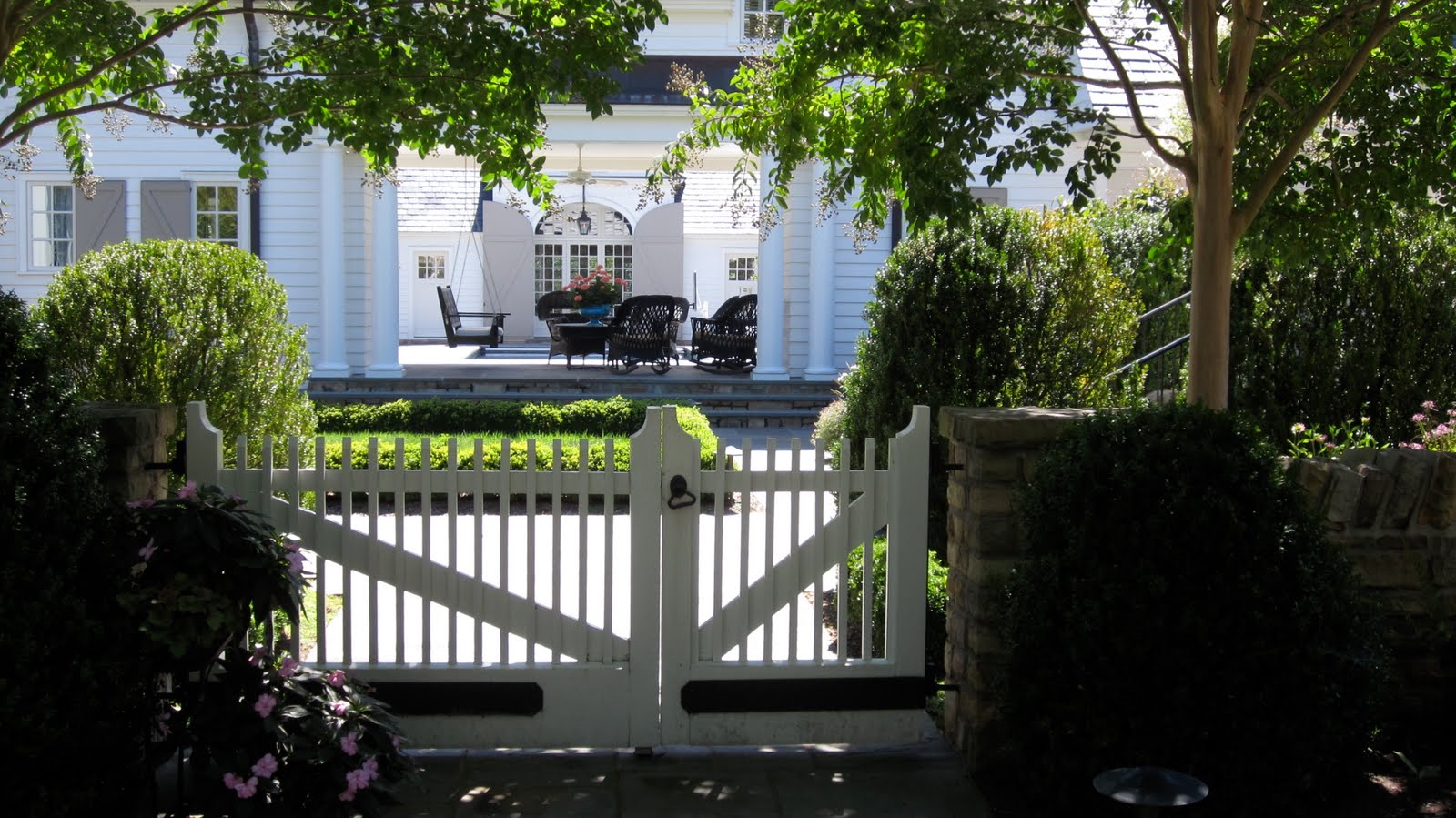


House Beautiful has a fantastic spread on this beautiful mountain retreat in the April issue. We posted this article in August of 2010 and thought you would enjoy our thoughts on the subject as well.
Ruard Veltman collaborated with my friend "Mrs. G.," creating a spectacular home for her family of 6 in the English country vernacular of Sir Edwin Landseer Lutyens:  "Sir Edwin, father of  neo-Georgian architecture, please meet Dutch born, Ruard Veltman, of nieuw-neo-Georgian architecture!"


As many of you know, I live across the street from the Historic Reynolda House Museum, Gardens and village. Our pastoral, small city is highly cultural and well preserved greatly, by the perseverance and generosity of the Reynolds family. I noted in my last post, on the Reynolda Estate,  that R. J. Reynolds was a highly progressive thinker who married an educated and energetic wife, to whom he accorded a great amount of personal autonomy. The estate was purchased in her name and Kate had full control over the vision, execution and management of this self sufficient enterprise--in 1917.  R.J. Reynolds died soon after the house was completed, which was a terrible loss.
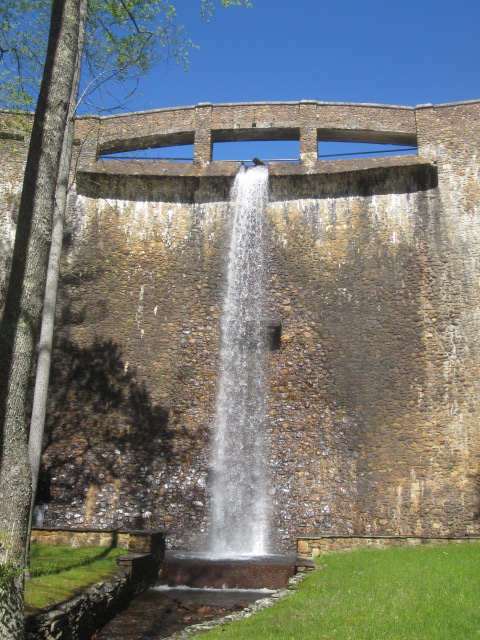
Long Island is famous for its Gilded Age Estates, immortalized by F. Scott Fitzgerald and chronicled, with vigilance by Zach L. in his blog Old Long Island.  The American Country house movement was propelled by the tremendous fortunes earned in steel, railroads, shipping, coal and oil. Vanderbilts, Whitneys, Phipps, Morgans, Pratts, Graces and Hearsts, to mention a few, erected spectacular weekend estates in Nassau County as private country clubs. Palatial homes in every idiom sprouted with architectural stables, polo fields, and Playhouses. Architect James W. O'Connor  cornered the Playhouse market. A Playhouse is a separate house, containing an indoor tennis court, occasionally a swimming pool, guest rooms, and a large gathering living room overlooking the tennis courts. This Playhouse survives today, and is one of the few private Playhouses remaining in the country.


I have been following fellow blogger, Jane Schott of Empress of the Eye, since she had her Fortuny pillow giveaway. I'm still sulking, since I was not the winner, but I've gained a bird's eye view into, literally, some of the best shopping in America. Jane is The Dixie Highway Chick, no question. Like High Point, it is a great jumble of shops and junk with some serious steals, but... you need to know where you are going. Jane knows.


#9:  High Point Market at Hickory Chair with Alexa Hampton--Video Tutorial

We have been saving the highlights from last April market to get everyone geared up for October! Watch our video of the always inspirational Hickory Chair space and listen to Alexa Hampton's take on the importance of scale in furniture selection.  We are touring with Pat Bassett who has taught me every thing I've ever needed to know about shopping High Point. 

The Bloggers conference was a glorious excuse to visit L.A. at the end of February. Daughter number 2 and I arrived early to see some of our favorite haunts.  The highlight was visiting Hutton and Ruth Wilkinson's new masterful Hollywood Regency Palazzo, Casa Contessa. It is next door to Tony Duquette's iconic Dawn Ridge which Hutton uses as a design studio for his fabulous jewels and his HSN reproductions.

A fantastical chandelier floats down the stairwell beneath the skylight at the roof level, like a magical underwater creature. This shot is actually looking down the stairs and the skylight is reflected in the high sheen of the floors.
The Dovecote Decor blog is a supplement to our online store
Shop Here For Furniture, Lighting and Accessories

Thursday, March 28, 2013

Nieuw Neo Georgian! Ruard Veltman's Mountain Masterpiece

House Beautiful has a fantastic spread on this beautiful mountain retreat in the April issue. We posted this article in August of 2010 and thought you would enjoy our thoughts on the subject as well.


Ruard Veltman collaborated with my friend "Mrs. G.," creating a spectacular home for her family of 6 in the English country vernacular of Sir Edwin Landseer Lutyens:  "Sir Edwin, father of  neo-Georgian architecture, please meet Dutch born, Ruard Veltman, of nieuw-neo-Georgian architecture!"


This detail from the rear of the house illustrates the fusion of both schools: The Arts and Crafts ethic of combining hand crafted regional materials with swooping rooflines, deep eaves with Lutyens exaggerated Georgian windows, mullions, and transoms. From the inspirations of the pre-Raphaelite ideals,  Lutyens interpretations evolve and thrive in the ateliers of Bobby McAlpine where Ruard Veltman collaborated for many years. 


Nieuw (Dutch for new)-neo Georgian, interpreted by Mrs. G and Ruard Veltman, recombined from Atelier McAlpine, Fitz--meaning bastard son of--Lutyens, Fitz-Georgian, Fitz Pre Raphaelites, and Fitz Louis XIII , in an au courant grisaille color pallette, is all I have to say! Lets go through the bastards--shall we? 


Candida Lutyens, works within the legacy of her Grandfathers vision. Here we see the Georgian geometric paneling, windows, stone fire surround with the mixed geometry of arches and circles within the space that were the play things of her ancestor. 

Bobby McAlpine: Beautiful Homes: Late Summer edition 2009

These ancestral Elements also echo within the Mrs G./Mr. V. living room--Tall Georgian style windows, concrete or stone fire surround, naturally shaded palettes. Recombinant McAlpine, well bred DNA, marries provincial Regency Louis XIII Os de Mouton chairs (sheep horn stretchers), with a new aesthetic. New solvents react, mixing the French regency design period (1560-1643) with the Lutyens Arts and Crafts innovation (1810-1910). Both periods express changes in style, united by economic forces. The meteoric prosperity rise of the middle class, launched a Queen's wave to the past. Both visions unite as economic cusps.  Stately declines--nieuw rises, often with economic shifts,  often with enduring stylistic effects. Lets look around again. Grand takes on modern era--edge, tempered by soft velvets and palette. 


Edwin Lutyens struggled with his aristocratic wife, who immersed herself in the Spiritual Theocratic, schools of the era. Lutyens loved mixing geometrics, and Mrs. G. has had a contemporary seance in this vignette--triangles, on x's, on squares, upon rectangles,  within circles--the woman is all harmonious, oxymoronish, symmetry and complication. Welcome to Mr. G.'s world! 


Ultra modern lighting in the foreground gets invited to the party. The best parties, like interiors include all ages and types.  Mrs. G. explained that the gray palette throughout the house was inspired by the Jasper John's exhibit at the Metropolitan Museum of Art.  Mrs. G. wanted the architectural interplay of Geometry and curve to dominate the conversation. The neutrality of tone creates intimacy, and comfort. According to the Met's Johns catalogue, the grisaille application was: "to evoke a mood, at other times to evoke an intellectual rigor that results from his purging most color from his works." 


The rhythmic curves, of the nail head trim, break up the right angles in the geometry of the furnishings and architecture. They echo the swooshy Lutyens curves that are so characteristic of his work and relate to the counterpoint of the curvy Os de Mouton chairs. The dining area is raised above the living room adding visual dimension and depth to the large space. It creates a theatrical mood, where I for one, would have spent my childhood creating plays. The landscape, a reflection of the mountain environment, was painted by Mrs. G.'s father. 


The kitchen is very nieuw, and forgive our struggles with the light! Veltman's theory of kitchens is that as the contemporary center of entertaining, the refrigerators, dishwashers, coffee makers, and televisions should disappear. At a recent cocktail party, I was delighted to walk into a kitchen full of brightly clad guests set off by the chic aura of an upscale eatery in Soho. It is so very Lutyens, Veltman, Mrs. G. to plant a completely new space, that is united to the house in the color scheme. The accoutrement are cleverly disguised behind the paneling.


The nieuw countertop is in the cupboard or just off stage, in the pantry. Ruard is a fan of pantries, as lately, so is the entire blogosphere. Mrs. G. reports that it functions very well for a large family. 


Moving upstairs, I had to do a little detective work to discover the meaning of the head boards, and all the little hints Mr. Veltman planted all over the house, as little swooshy motifs, or footnote references. 


The eponymous Lutyens Napoleon chair was designed by Sir Edwin in 1910, supposedly after a Jacques-Louis David painting of Napoleon sitting in an asymmetric chair. I think it is because they resemble his hat. Little swooshes are repeated throughout the house. Let me know what you think!


Veltman designed this headboard, in the guest room, and I see the DNA recombined; characteristic Lutyens swoosh meets a glamourous Hollywood starlet. According to the Lutyens Furniture website: "Rhythmical symmetry.... is typical of Lutyens's love of form." I think Sir Edwin would love the nail head trim.  Evan Wood of Chandelier and Light in Charlotte, N.C. crafted the sconces throughout the house.


The  Thakeham bench has become the archetypal image associated with Sir Edwin Landseer Lutyens. 


I know, I know where...is the clutter? This house is a completely new installation and has not acquired the layers and perfect additions that only time can provide.  Here, we have a Napoleon hat divided by a semi-circle. Another genuflect to the master's delight of interplay of rythmic line, geometry and the occasional symmetry.


Sir Edwin Lutyens jokingly called his neo-Georgian work, his: "Wrennaissance style." I think Mrs. G. and Ruard Veltman can add to the discussion as a Nieuw Wrennaissance style. As always, I like to leave you with a quote. Mr. Lutyens in a famous apology to his wife:

"I will wash your feet with my tears and dry them with my hair. True, I have very little hair but then you have very little feet.’